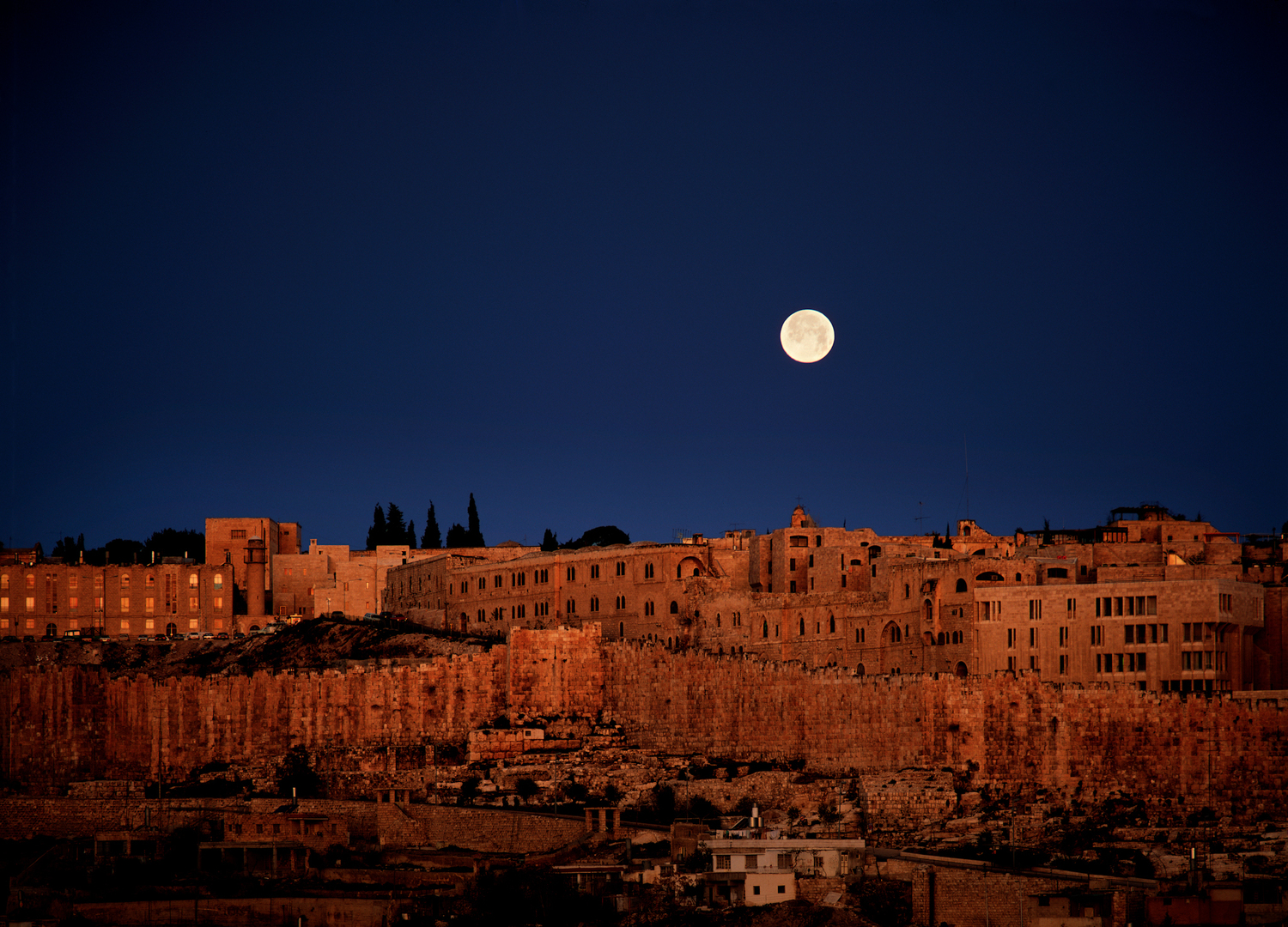
The Jewish calendar is much more than a system for measuring the passage of time. It is the sacred rhythm by which the Jewish people organize their religious lives, remember their history, celebrate their covenant with God, and gather together in worship. Through the observance of Shabbat, the new months, and the annual festivals, we connect ourselves not only to the commandments of the Torah but also to countless generations of Jews who have lived according to these same sacred rhythms.
For those of us who practice Netzarim Judaism, however, the question of which calendar to follow presents an interesting theological challenge. As a movement rooted in Biblical and Karaite Jewish thought, we affirm the Written Torah, the five books of Moses, as the sole binding source of Jewish Halakhah. We do not accept the Talmud or the concept of an independently binding Oral Law as possessing authority equal to the commandments given through Moses. Nevertheless, we recognize the importance of Jewish tradition, the wisdom of our ancestors, and the legitimate role of communal interpretation in applying Torah to everyday life.
This raises an important question: Can we legitimately follow the established Jewish calendar, commonly called the Rabbinic calendar, without accepting the religious authority of Rabbinic Judaism?
We believe that we can. Indeed, we believe that following the established Jewish calendar, with certain modifications grounded in our understanding of the Torah, represents a reasonable, practical, and theologically defensible expression of Netzarim Judaism.
The International Assembly for Netzarim Judaism (IANJ) therefore adopts the established calculated Jewish calendar as its standard for communal observance, while recognizing the right of individual Netzarim congregations to adopt a traditional observational calendar through a deliberate decision of their community.
Our position rests upon a fundamental distinction between the commandments of God and the human methods we employ to fulfill them. The Torah establishes the appointed times and their religious obligations. The calendar is the instrument through which the Jewish people determine when those commandments are to be observed.
Equally important, we believe that the adoption of a calendar is properly a communal responsibility rather than a matter of unrestricted individual preference. While every Jew remains personally accountable for their understanding and observance of Torah, a functioning Jewish community must share a common sacred calendar. We cannot truly gather as a congregation for the appointed festivals if each person decides independently when those festivals should occur.
Understanding this distinction allows us to remain faithful to the Written Torah, honor our Karaite heritage, preserve our connection with the wider Jewish people, and build stable communities capable of sustaining Jewish religious life in the modern world.
The Biblical Foundations of the Jewish Calendar
Any discussion of the Jewish calendar must begin with the Written Torah itself. Our concern is not simply whether a particular calendrical system is ancient or traditional, but whether it represents a reasonable application of the commandments God has given to Israel.
In Genesis 1:14, we are told that the heavenly lights were established to distinguish day from night and to serve as signs for appointed times, days, and years. This passage places the measurement of sacred time within the natural order of creation. The movements of the sun and moon provide the recurring patterns through which human beings recognize the passage of days, months, seasons, and years.
In Exodus 12:2, God declares that the month associated with Israel’s departure from Egypt shall be the beginning of months. This establishes the first month of the religious year, traditionally known as Aviv or Nisan. Exodus 13:4 and Deuteronomy 16:1 further connect this month with the season of Aviv, the springtime period associated with the ripening of grain in the Land of Israel.
Leviticus 23 establishes the principal appointed festivals of Israel, identifying their dates and outlining their religious significance and observances. Passover and the Festival of Unleavened Bread occur during the first month. The Festival of Weeks is determined through a prescribed counting of seven complete weeks. The first day of the seventh month is designated as a sacred occasion of remembrance and sounding, followed by the Day of Atonement on the tenth day and the Festival of Sukkot beginning on the fifteenth day.
These commandments establish the fundamental structure of Israel’s religious calendar. The months follow a lunar pattern, while the annual festivals remain connected to the seasons. In this sense, the Jewish calendar is lunisolar, reconciling the recurring cycle of the moon with the annual progression of the sun.
Yet the Torah does not provide a complete technical procedure for constructing that calendar.
It does not present mathematical formulas for calculating lunar months. It does not explicitly prescribe the precise method by which the first appearance of the lunar crescent must be verified. It does not establish a comprehensive set of criteria for determining when an additional month must be inserted into the year, nor does it prescribe the administrative procedures by which Israel must resolve every possible calendrical disagreement.
These details are important because they demonstrate that the Torah establishes the religious obligations without exhaustively specifying every procedure necessary for their practical administration.
A calendar must nevertheless be established. The commandments cannot be observed without determining when the relevant dates occur.
Consequently, Jewish communities have always needed some combination of observation, interpretation, calculation, and agreement to organize their sacred year.
Recognizing this does not diminish the authority of Torah. Rather, it acknowledges the difference between the divine commandment and the human responsibility to implement it.
From Observational Practice to the Established Jewish Calendar
In ancient Israel, the determination of months was closely connected with observation of the moon, while the relationship between the lunar year and the agricultural seasons influenced the addition of an extra month when necessary. Over time, Jewish communities developed procedures for determining these dates and coordinating festival observance.
The Rabbinic and Karaite traditions eventually developed different approaches to this responsibility.
Within Rabbinic Judaism, the calendar gradually evolved into the calculated system familiar to most Jews today. The modern calendar uses a nineteen-year cycle containing seven leap years, allowing lunar months to remain broadly aligned with the solar seasons. It also incorporates established calculations for determining the beginnings of months and postponement rules that affect the date of the seventh month’s beginning.
Jewish tradition commonly associates the adoption of a fixed calendar with Hillel II in the fourth century CE. Historical scholarship, particularly the work of Sacha Stern, suggests a more gradual process of development, with the modern system reaching its standardized form over several centuries.
Whatever the precise history of its development, the calendar became one of the most important institutions of Jewish communal life. It permitted Jewish communities separated by great distances to anticipate the appointed festivals and observe them according to a shared schedule.
Our Karaite brethren generally preserved a different approach, emphasizing observation of the new lunar crescent and the condition of Aviv barley in the Land of Israel. This system seeks to maintain a direct relationship between the biblical calendar and the natural phenomena associated with the months and agricultural seasons.
We recognize the legitimacy and historical importance of this approach. Indeed, our intellectual and theological heritage owes much to Karaite Jewish scholarship, and we continue to value the observational calendar as a serious attempt to follow the plain meaning of the Torah.
Nevertheless, observational practice also requires interpretation.
Even among historical Karaite communities, disagreements developed concerning what constituted sufficiently mature Aviv barley, which locations should be used for observation, and how particular astronomical or agricultural conditions should be interpreted. Historical research by Nadia Vidro has documented differences in calendar determination among medieval Karaite communities themselves.
This is an important reminder that no system entirely eliminates the human element from calendar determination.
An observational system requires decisions about what observations are sufficient, how they should be evaluated, and who is responsible for communicating the results. A calculated system requires mathematical conventions and agreed procedures. Both systems are human attempts to fulfill the commandments of Torah.
We therefore reject the simplistic argument that an observational calendar is automatically divine while a calculated calendar is inherently contrary to Scripture.
The more appropriate question is whether a particular calendrical system provides a reasonable and faithful method of observing the appointed times established in the Torah.
We believe the established Jewish calendar satisfies that requirement sufficiently to serve as our normal communal calendar, while recognizing that some of its conventions remain open to legitimate scriptural criticism.
Accepting Jewish Tradition Without Accepting Oral Law
One of the defining principles of Netzarim Judaism is our distinction between Oral Law and oral tradition.
We reject the theological claim that an additional body of divine legislation was revealed to Moses and transmitted through subsequent generations with authority equal to the Written Torah. We do not believe that the rulings of the Talmud, or the decisions of later rabbinic authorities, become universally binding commandments merely because they have been accepted within Rabbinic Judaism.
This does not mean that we reject Jewish tradition itself.
Judaism has always involved customs, interpretations, legal decisions, and communal practices developed by human beings. The Written Torah does not describe every prayer we might offer, every ceremony we might perform, or every practical arrangement necessary for organizing a synagogue. Jewish communities have developed these things through experience, study, and the desire to live faithfully within the covenant.
We may accept such practices when they are consistent with Torah, appropriate to our circumstances, and beneficial to Jewish life.
We can likewise recognize the legitimate role of Jewish courts and community leadership. A Beit Din may examine a dispute, interpret a commandment, or establish a procedure for a particular community. Its decisions may properly govern the practical affairs of those who agree to live under that communal arrangement. Yet those decisions remain human judgments. They do not become additional words of God.
The distinction is especially relevant to the calendar.
We do not follow the established Jewish calendar because we believe the rabbis possessed divine authority to replace the observational practices of earlier generations. We follow it because we recognize that the calendar represents a developed Jewish method for fulfilling the Torah’s requirements, and because we find it sufficiently sound and beneficial for communal observance.
The fact that a practice emerged through Rabbinic Judaism does not automatically make it unacceptable to Netzarim Jews.
We do not reject a prayer simply because it appears in a Rabbinic prayer book. We do not dismiss the wisdom of Maimonides because he was a Rabbinic scholar. Nor do we reject a reasonable interpretation of Scripture merely because that interpretation was also accepted by the sages of the Talmud.
We evaluate these things according to their merit and their consistency with Torah.
The same principle applies to the calendar.
Using a calendar developed through Rabbinic institutions does not require us to surrender our theological independence or acknowledge the Talmud as a binding source of Halakhah.
We are accepting a practical convention, not an additional revelation.
Why the IANJ Follows the Established Jewish Calendar
There is another consideration that deserves particular attention: our relationship with the wider Jewish people.
Netzarim Judaism does not regard itself as a separate religion or a community standing outside of Israel. We are Jews, part of the same people and the same covenant as our Rabbinic, Karaite, and other Jewish brothers and sisters.
Our differences concern the interpretation and practical application of Jewish law, not our fundamental identity as members of the Jewish people.
For this reason, we consider Jewish unity to be an important religious value.
The calendar is one of the most visible expressions of that unity. Every year, Jews throughout the world gather to remember the Exodus, commemorate the giving of Torah, examine their lives during the appointed season of repentance, and celebrate the festivals inherited from our ancestors.
These occasions unite Jewish families and communities across national boundaries, languages, cultures, and denominational divisions.
When we share a common calendar, we participate in that larger expression of Jewish peoplehood.
A Netzarim congregation observing Pesach on the same date as the wider Jewish community can invite neighboring Jews to its Seder, participate in intercommunal celebrations, and share the religious season with family members who follow other Jewish traditions.
A Jewish child raised in a Netzarim household can celebrate the festivals alongside Jewish relatives, friends, and classmates without the unnecessary complication of an entirely different religious schedule.
These are not merely matters of convenience. They are expressions of our shared identity and continuity as a people.
Of course, unity alone cannot justify abandoning a clear commandment of Torah. If the established calendar required us to violate an unambiguous divine prohibition, our responsibility would be to follow Torah regardless of the consequences.
But where the Torah leaves room for legitimate interpretation and practical administration, we believe that Jewish unity is a meaningful consideration in determining how we should proceed.
The established Jewish calendar also possesses substantial practical advantages. Its dates can be calculated far in advance, allowing communities to arrange synagogue services, educational programs, communal meals, and public celebrations. Families can plan travel, request religious accommodations from employers and schools, and prepare for the festivals without waiting for the results of lunar or agricultural observations.
These considerations become particularly important for small Netzarim communities, whose members may be scattered across cities, countries, or even continents.
A predictable calendar makes it easier to maintain religious life and build lasting institutions.
None of this means that an observational calendar is illegitimate or that it cannot be administered successfully. It simply recognizes that a shared, predictable calendar serves important purposes within contemporary Jewish life.
For the IANJ, the combination of scriptural defensibility, historical continuity, practical usefulness, and Jewish communal unity provides a compelling reason to adopt the established Jewish calendar as our standard.
Following the Calendar While Remaining Faithful to Torah
Our adoption of the established Jewish calendar does not mean that we automatically accept every Rabbinic custom or observance associated with it.
We distinguish between the calendar’s function in determining dates and the religious requirements attached to those dates.
Our commitment remains to the commandments of the Written Torah.
For example, Exodus 12:2 establishes the month of Aviv, traditionally called Nisan, as the first month of Israel’s religious year. Although the established Jewish calendar traditionally numbers its years beginning with Tishrei and associates that month with Rosh Hashanah, we continue to recognize Nisan as the first month according to the Torah’s numbering of the sacred months.
We can acknowledge Tishrei as the customary beginning of the civil or conventional Jewish calendar year without confusing it with the first month established in Exodus.
Likewise, the Torah identifies the first day of the seventh month as a sacred occasion characterized by remembrance and sounding, traditionally understood as Yom Teruah. We preserve this biblical identity even while recognizing the later Jewish name Rosh Hashanah and appreciating the themes of reflection and repentance associated with the season.
Our observance is directed first toward the commandment found in Leviticus 23 and Numbers 29, rather than toward the assumption that every later custom associated with Rosh Hashanah is itself a divine obligation.
Similarly, we do not regard the additional festival days traditionally observed by many Rabbinic Jews in the Diaspora as universally binding commandments.
The Torah prescribes the duration of the festivals and identifies their sacred convocations. The Festival of Unleavened Bread lasts seven days, with sacred assemblies on the first and seventh days. Shavuot is observed as a single festival day. Yom Teruah and Yom Kippur are each designated for a particular day. Sukkot lasts seven days and is followed by the distinct sacred assembly of the eighth day.
We therefore observe the biblically prescribed festival days without requiring an additional day of festival sanctity simply because a community lives outside the Land of Israel. Individuals and families may choose to participate in additional traditional celebrations, but such customs do not acquire the status of Torah commandments.
Other traditional Jewish holidays, including Hanukkah and Purim, may likewise be celebrated as meaningful expressions of Jewish history, identity, and culture. We do not, however, treat their observance as carrying the same divine legal obligation as the appointed festivals established in the five books of Moses.
Certain questions of biblical interpretation also remain distinct from our decision to use the fixed calendar. The counting of the Omer and the determination of Shavuot, for example, involve differing understandings of the language of Leviticus 23. Such questions must be examined through Torah study and resolved within the community’s established observance rather than assuming that adopting a particular calendar automatically settles every interpretive disagreement.
We also recognize that the fixed calendar incorporates postponement rules and other conventions that are not explicitly commanded in Scripture. We accept these as elements of the established calendrical system, not as independently binding religious legislation. Their legitimacy remains subject to continued examination against the Written Torah.
The essential distinction remains unchanged. We accept the calendar as a practical method of identifying our sacred dates, while allowing the Torah to determine the religious obligations associated with them.
In this way, we preserve our identity as a Torah-centered Jewish movement without unnecessarily rejecting the traditions and practical institutions developed by our fellow Jews.
The Calendar Is a Communal Responsibility
Perhaps the most important aspect of our position concerns who should decide which calendar a congregation follows.
Within Netzarim Judaism, we place considerable emphasis upon the primacy of conscience. We believe that every Jew bears personal responsibility for studying Torah, understanding its commandments, and applying them with integrity. We reject the idea that a rabbi possesses unrestricted authority to dictate every aspect of another person’s religious life.
Nevertheless, personal responsibility must be understood alongside our obligations to one another.
Judaism is not merely a collection of private religious practices. It is the covenantal life of a people, lived through families, congregations, and communities.
The Torah repeatedly addresses Israel as a people gathered together in covenant. Its commandments establish responsibilities not only for individuals but for households, assemblies, courts, and the nation as a whole.
This communal character is particularly evident in the appointment of the sacred festivals.
In Leviticus 23:2, God instructs Moses to speak to the children of Israel concerning the appointed times, which they are to proclaim as sacred convocations. The Hebrew expression mikra’ei kodesh refers to sacred occasions or assemblies, emphasizing that these observances possess a public and communal character.
The festivals are not simply private appointments that each Israelite may schedule according to personal preference.
They are occasions for the people to gather together.
This has profound implications for determining the calendar.
If every member of a congregation independently decides when the new month begins, when an additional month should be inserted, or when a festival must be observed, the congregation can no longer maintain a coherent religious calendar.
One family might begin Pesach while another believes that the first month has not yet arrived. Some members might gather for Yom Kippur while others insist that the appropriate day is still several days away. A congregation could find itself unable to organize services, communal meals, religious education, or shared holiday observances.
Such a situation would undermine the very communal character that the Torah assigns to the appointed festivals.
There is also a deeper theological consideration.
The Torah’s instruction to proclaim the appointed times is addressed to Israel collectively. While it does not establish the modern Rabbinic calendar or give unrestricted authority to any particular religious institution, it does support the understanding that sacred time must be recognized and observed as a matter of communal agreement.
The Jewish people have always required some means of coordinating their common religious obligations.
We therefore believe that the determination of the calendar should ordinarily be a decision made by the congregation or community as a whole, rather than by each person acting independently.
This principle does not diminish the importance of individual conscience. Rather, it recognizes that joining a religious community involves accepting certain shared responsibilities.
When we become part of a congregation, we agree to participate in a common religious life. We may hold different opinions about prayer, interpretation, personal customs, and philosophical questions, but we must also recognize the necessity of agreement on matters essential to worshiping together.
The calendar is one of those matters.
A congregation cannot meaningfully observe the same festival together if its members refuse to agree upon when that festival occurs.
The Role of Community Leadership and Consensus
Because we understand calendar determination as a communal responsibility, we do not believe that an individual rabbi should simply impose a calendrical system upon a congregation without discussion or consideration.
Within Netzarim Judaism, rabbis are first and foremost teachers and spiritual guides. They possess knowledge and experience that may help a community make informed decisions, but their opinions do not become divine law merely because they hold rabbinical ordination.
When a community considers adopting or changing its calendar, the rabbi should help its members understand the relevant biblical passages, the historical development of the Jewish calendar, the reasoning behind the observational approach, and the practical consequences of each available choice.
Community members should have the opportunity to ask questions, express concerns, and participate in the decision.
The goal should be to reach a thoughtful agreement that reflects both fidelity to Torah and the practical needs of the congregation.
Such decisions should not be made casually or repeatedly changed according to convenience. Once a congregation has established its calendar, that calendar should provide a stable basis for the community’s religious life.
An established community may certainly reconsider its approach when new information, changed circumstances, or serious interpretive questions make such reconsideration appropriate. But any change should arise through a deliberate communal process, with sufficient notice and preparation for everyone affected.
This is especially important because calendar decisions influence much more than synagogue services. They affect family gatherings, workplace arrangements, children’s education, holiday preparations, and relationships with other Jewish communities.
A congregation that changes its calendar without careful consideration may create unnecessary hardship for the very people it exists to serve.
For these reasons, we encourage communities to establish clear procedures for determining their calendar, communicating festival dates, and addressing future questions or disagreements.
The purpose of such procedures is not to create another system of binding Oral Law. It is to provide the stability and mutual understanding necessary for responsible communal life.
Respecting Communities That Follow the Observational Calendar
Although the IANJ follows the established Jewish calendar as its ordinary standard, we recognize that some Netzarim communities may prefer to follow an observational calendar based upon the appearance of the new moon and the agricultural conditions associated with Aviv.
We respect this decision when it arises from sincere Torah study and a thoughtful agreement among the members of the community.
Our Karaite heritage provides a substantial body of scholarship and historical practice upon which such communities may draw. We do not regard their choice as a rejection of Netzarim Judaism, nor do we consider them less faithful or less Jewish because they follow a different calendrical method.
Indeed, our recognition of communal autonomy requires us to acknowledge that different communities may reach different conclusions concerning matters that the Written Torah does not settle with complete procedural specificity.
However, this freedom belongs to the community as a functioning religious body. It should not be understood as an invitation for every individual member to establish a separate religious calendar while continuing to participate in the same congregation.
If a Netzarim congregation collectively adopts the observational calendar, then that calendar should govern the communal religious life of its members. Its services, festivals, sacred assemblies, and religious activities should be organized accordingly.
Likewise, when a congregation adopts the established Jewish calendar, its members should follow that calendar in their participation in congregational observances.
This does not mean that a person must abandon sincere questions or suppress disagreement. A member may continue studying the calendar, discussing alternative interpretations, and advocating for reconsideration through the community’s established process.
But while participating in a particular congregation, that person should respect the calendar the community has agreed to follow.
A person cannot reasonably expect the entire congregation to reorganize its festival observances whenever an individual arrives at a different personal calculation.
Where a disagreement becomes a matter of serious conscience, the community should seek a respectful resolution through study and discussion. If agreement is impossible, a person may choose to worship with another congregation whose calendar better reflects their convictions, or work with like-minded Jews to establish a separate community.
Such differences need not lead to hostility or accusations of religious error.
We can remain part of the same Jewish people, respect one another’s convictions, and maintain meaningful relationships even when our communities follow different calendrical traditions.
What matters is that each community maintain a consistent and shared pattern of religious observance.
We would further encourage communities adopting an observational calendar to establish their methodology clearly in advance. Questions concerning the location of lunar observations, standards for verifying the new crescent, the determination of Aviv, and procedures for resolving uncertainty should be addressed collectively rather than left to independent decisions by individual members.
A community that follows the observational calendar still requires a common calendar.
The principle of communal agreement applies equally to both systems.
Individual Conscience and the Responsibilities of Jewish Community
At first glance, our emphasis upon a shared community calendar may appear to conflict with the Netzarim principle that every Jew is ultimately responsible for their own Halakhah.
In reality, these two principles are complementary.
Personal conscience concerns our responsibility to understand Torah and live according to its commandments. Communal agreement concerns our responsibility to cooperate with others in those aspects of Jewish life that necessarily require collective action.
There is no contradiction between the two.
An individual Jew may study Scripture independently and develop personal conclusions concerning prayer, religious customs, or ethical obligations. But when that individual joins a congregation, certain activities require cooperation.
A prayer service cannot function if every participant insists upon conducting an entirely different service at the same time. A communal meal cannot be organized without agreement concerning when and where it will occur. A Beit Din cannot adjudicate a dispute without some commonly accepted procedures.
These agreements do not make human decisions divine. They simply allow a community to function.
The calendar operates according to the same principle.
We voluntarily accept a shared calendar because we recognize that our religious responsibilities extend beyond ourselves.
This is part of the meaning of belonging to Israel.
Our covenant is both personal and collective. Each Jew must seek to live faithfully before God, yet none of us lives in complete isolation from the people with whom we share that covenant.
Jewish life requires mutual consideration, patience, cooperation, and a willingness to distinguish between those matters on which we must remain firm and those on which reasonable compromise is possible.
We should also remember that religious humility is itself a virtue.
When the Torah does not provide a fully explicit answer to a technical question, we should be cautious about claiming absolute certainty for our preferred interpretation.
We may believe that one calendrical system is preferable while recognizing that sincere and knowledgeable Jews have reached different conclusions.
Such humility does not require us to abandon our convictions. It requires us to recognize the limits of our knowledge and the responsibilities we owe to one another.
For the sake of shared worship, communal stability, and mutual respect, a Jew may reasonably agree to follow the calendar adopted by their congregation even while acknowledging that other interpretations remain possible.
That agreement is not blind obedience to religious authority.
It is an expression of covenantal responsibility.
The IANJ Position: A Shared Calendar, Rooted in Torah
The International Assembly for Netzarim Judaism follows the established calculated Jewish calendar as its standard for determining the annual cycle of communal observances.
We do so because we believe it provides a historically grounded, practical, and scripturally defensible means of implementing the calendar requirements of the Written Torah. Its widespread acceptance also allows us to share in the religious life of the broader Jewish people, maintaining the bonds of tradition and peoplehood that unite Israel across generations and denominations.
Our acceptance of this calendar does not imply acceptance of the Talmud as an authoritative source of divine law, nor does it require us to adopt every later Rabbinic custom associated with the festivals.
We continue to recognize the first month established in Exodus, observe the festivals according to the durations and obligations prescribed in Torah, and distinguish between divine commandments and optional Jewish traditions.
We regard the calculations and conventions of the established calendar as human instruments subject to study and evaluation, not as laws revealed at Sinai.
At the same time, we recognize the legitimacy of Netzarim congregations that collectively choose to follow an observational biblical calendar. Such communities remain welcome within the broader Netzarim Jewish movement and should receive the same respect and support as those following the established calendar.
Our expectation, however, is that each congregation will adopt and maintain one common calendar for its religious life.
Calendar selection should be made through informed communal discussion and agreement, not through the independent preferences of individual members. Once that decision has been made, members should honor the shared schedule of their congregation so that the appointed festivals may be observed together.
The IANJ’s own publications, organized services, educational programs, and religious gatherings will ordinarily follow the established Jewish calendar, with the biblical distinctions described above. Locally autonomous communities may follow a different calendar through their own established communal processes, without that difference becoming a test of their legitimacy as Netzarim Jews.
This position reflects our understanding of religious authority, personal conscience, and communal responsibility.
It preserves the supremacy of Torah without rejecting the legitimate contributions of Jewish history and tradition. It allows diversity among communities without allowing individual preference to undermine the shared religious life of a congregation. It supports our Karaite heritage while remaining connected to the wider Jewish people.
Formal Theological Statement on the Jewish Calendar and the Appointed Times
Proposed Statement of the International Assembly for Netzarim Judaism
We affirm that the appointed times of Israel, established within the Written Torah, are sacred commandments given by God to the Jewish people. The Torah determines the nature, purpose, and obligations of these observances, and no human tradition, religious authority, or institutional decree possesses the authority to alter, negate, or supersede those commandments.
We recognize that the practical determination of the Jewish calendar has developed throughout our history through astronomical observation, mathematical calculation, scholarly interpretation, and communal agreement. These methods are human instruments developed to facilitate the faithful observance of the Torah. Although such methods may possess historical legitimacy and practical authority within a community, they do not themselves constitute divine law.
We affirm the distinction between the Written Torah, which alone establishes binding Jewish Halakhah, and the traditions, interpretations, and practical regulations developed by Jewish communities. We recognize the legitimacy of Jewish oral traditions when they are consistent with Torah and appropriate to the circumstances in which they are practiced. We do not recognize the Talmud or Rabbinic Oral Law as possessing independent divine legislative authority.
While honoring the observational calendar preserved within Karaite Jewish tradition, we recognize the established calculated Jewish calendar as a legitimate, practical, and historically significant means of organizing our religious year. Accordingly, the International Assembly for Netzarim Judaism adopts the established Jewish calendar as its standard for communal observance, while maintaining the primacy of the Written Torah in determining the commandments and obligations associated with each sacred occasion.
We maintain the biblical identification of Aviv, traditionally known as Nisan, as the first month of the religious year. We observe the appointed festivals according to the commandments and durations prescribed in the Written Torah, without imposing additional festival days or later Rabbinic customs as universally binding religious obligations. We acknowledge the historical and cultural value of other Jewish observances, while distinguishing such traditions from the commandments established by God.
We affirm that calendar determination is properly a communal responsibility. The appointed times were given to Israel as sacred occasions to be proclaimed and observed together. Accordingly, we believe that each congregation should establish a single calendar through informed communal discussion, study, and agreement. All members of that congregation should follow its adopted calendar for communal religious observance, recognizing that participation in Jewish community carries responsibilities of cooperation, consistency, and mutual respect.
We recognize the autonomy of individual Netzarim congregations to adopt a traditional observational biblical calendar when such a decision reflects the considered agreement of their community. We affirm that these congregations remain equally legitimate expressions of Netzarim Judaism and that differences in calendrical methodology shall not, by themselves, constitute grounds for religious exclusion or division.
We uphold the responsibility of every Jew to study Torah, exercise informed conscience, and seek faithfully to understand the commandments of God. Nevertheless, we affirm that individual conscience must be exercised in recognition of the collective responsibilities inherent in Jewish life. Personal disagreement does not grant an individual the right to disregard or independently replace the calendar adopted by the congregation in which they participate. Questions concerning calendar observance should be addressed through respectful study, dialogue, and established communal processes.
We affirm the importance of Jewish unity and the value of sharing the sacred occasions of Israel with the wider Jewish people whenever doing so remains consistent with the commandments of Torah. We recognize that our differences concerning the calendar need not diminish our shared covenant, our common heritage, or our responsibility to one another.
Finally, we acknowledge that no human calendrical system is beyond examination or correction. Where substantial questions arise concerning a calendar’s consistency with the Written Torah, we encourage continued study, careful interpretation, and thoughtful communal reconsideration. Our commitment is not to the infallibility of any human tradition, but to the enduring authority of Torah and the faithful observance of God’s commandments.
We therefore affirm that the IANJ follows the established Jewish calendar, with observances grounded in the Written Torah, while respecting the right of autonomous Netzarim communities to adopt an observational calendar through communal agreement. In all cases, we uphold the principle that the calendar of a congregation is to be shared by its members, so that the appointed times of Israel may be observed together in faithfulness, unity, and peace.
Conclusion: One People, One Covenant, Shared Sacred Time
The purpose of the Jewish calendar is not to create division among the people of Israel. Its purpose is to order our lives around the sacred occasions established by God, to remind us of our covenant, and to bring us together in worship, remembrance, repentance, and celebration.
We should never confuse the human instruments used to organize religious life with the commandments those instruments are intended to serve.
The calculated Jewish calendar is not Torah. Neither are the particular procedures developed by observational communities. Both are human methods intended to identify and preserve the sacred times established within Torah.
Our responsibility is to examine these methods thoughtfully, adopt those that faithfully serve our religious obligations, and remain willing to reconsider them when serious questions arise.
For the International Assembly for Netzarim Judaism, the established Jewish calendar, interpreted through our Torah-centered understanding of Halakhah, provides the most appropriate foundation for our common religious life.
We embrace it not because we submit to the authority of Rabbinic Oral Law, but because we recognize its value as a shared Jewish institution. We accept its practical benefits, honor the continuity it provides, and appreciate the opportunity to celebrate the appointed festivals alongside the greater Jewish community.
We also honor those Netzarim congregations that reach a different conclusion and choose to preserve an observational calendar. Our differences need not divide us, provided that each community acts with understanding, consistency, and mutual respect.
Above all, we remember that Judaism is not merely an individual relationship with God. It is a covenant shared by a people.
The festivals were given to Israel, not simply to isolated individuals. They call us to gather, to remember together, to worship together, and to pass our traditions to the generations that follow.
For this reason, the choice of calendar must ultimately be a communal decision, and those who belong to that community should share in its observance.
Our freedom to interpret Torah does not release us from our obligations to one another. Rather, it calls us to exercise that freedom with wisdom, humility, and a genuine commitment to the wellbeing of our fellow Jews.
We do not need to agree on every interpretation of Scripture to remain one people. But within the communities we build, we must learn to live, worship, and celebrate together.
One Torah, one covenant, and one shared calendar within each community.
That is the balance we seek: fidelity to the commandments of God, respect for the traditions of Israel, and the unity necessary to live a meaningful Jewish life in the modern world.
Leave a Reply
You must be logged in to post a comment.